
Chemicals, Raw materials
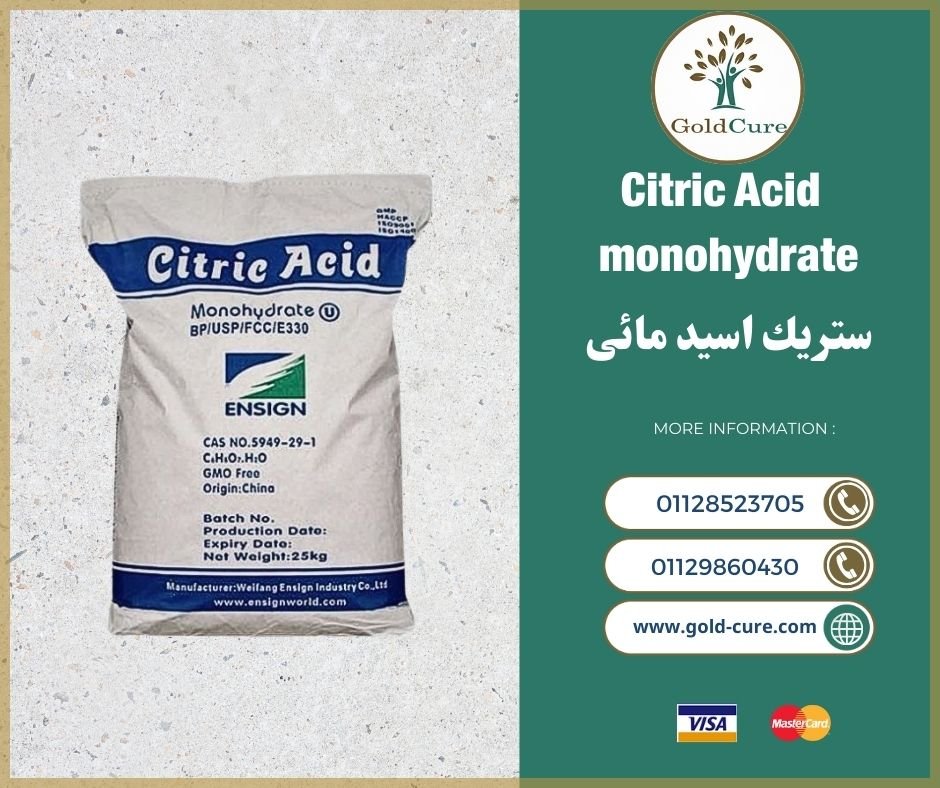
Citric acid Monohydrate
السعر الأصلي هو: 59 EGP.55 EGPالسعر الحالي هو: 55 EGP.
Citric acid monohydrate is a weakly acidic, naturally occurring compound found in citrus fruits, used commercially as a preservative, flavoring agent, and pH adjuster in foods, beverages, and pharmaceuticals. It is the “historic” form of citric acid, containing one water molecule per molecule of citric acid, giving it a crystalline powder appearance and making it slightly less soluble than the anhydrous form but more stable in humid environments. Its chemical formula is

C6H8O7·H2Ocap C sub 6 cap H sub 8 cap O sub 7 center dot cap H sub 2 cap O
𝐶6𝐻8𝑂7·𝐻2𝑂
and its CAS number is 5949-29-1.
Properties and uses
-
- Appearance: White, crystalline powder with a strong, sour taste.
- Solubility: Very soluble in water.
- Stability: Non-toxic, chemically stable, and fully biodegradable. It is more resistant to clumping in humid conditions compared to the anhydrous form.
- Uses:
- Food and beverages: To provide a sour flavor and act as a preservative.
- Pharmaceuticals: As an excipient (inactive ingredient) to maintain the stability of active ingredients, control pH, and act as a buffer. It can also be used to form salts of minerals for supplements and as an anticoagulant by chelating calcium in blood.
- Biochemistry: It is a key intermediate in the citric acid cycle, a fundamental part of metabolism in living organisms.
| price | price appear for each kg in bag |
|---|---|
| country of origin | china |
المراجعات
لا توجد مراجعات بعد.